label_stop_radio

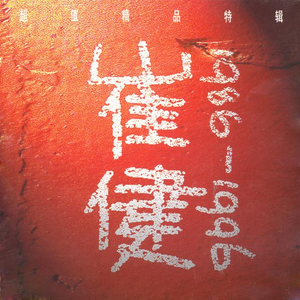
《崔健1986-1996》精选集 (Best of Cui Jian:1986-1996)
Cui Jian (born August 2, 1961) is a native Beijinger, trumpet player, guitarist and composer. Cui Jian, or Lao Cui (old Cui) is considered to be a pioneer in Chinese rock music and the first Chinese artist to break away from conventional Chinese popular forms and incorporate a rock style into his songs. In his later works, he has begun to experiment with rap music as well, adding a drummer/MC to his band for The Power of the Powerless (1998). Cui Jian grew up in a musical family in Beijing - his mother was a member of a Korean dance troupe and his father was a professional trumpet player. Cui Jian himself started playing the trumpet at the age of fourteen and joined the Beijing Philharmonic Orchestra in 1981, at the age of twenty. He was first introduced to rock during this period, when friends smuggled in illicit recordings from Hong Kong and Bangkok. Inspired by the likes of Simon and Garfunkel, and John Denver, Cui began learning to play the guitar. In 1984 he formed Seven Ply Board with six other classically-trained musicians. The seminal band was heavily influenced by the Beatles, Rolling Stones and Talking Heads. They performed their own works - mostly soft rock and love songs - in local hotels and bars. Cui Jian first shot to stardom in 1985, when he performed Nothing to My Name (一无所有) on a television talent show. The next year he left his permanent job with the orchestra. His first real album, Rock and Roll on the New Long March, was released in 1987. In the late 80s and early 90s, along with artists such as He Yong, Cui created a hybrid and experimental music mix that cut across divisions between pop music genres. Cui's songs drew on folk and traditional music types, such as the peasant songs of the Loess Plateau of Shaanxi. At times they knowingly parodied Communist sayings and proverbs. His earliest and best known works were spiced with European popular music typles. He reached the apogee of his popularity during the Tiananmen Square protests of 1989, when Nothing to My Name became the anthem of the protestors. Before the protests were broken up on June 4-5, Cui frequently appeared with the students and was affirmed by Wu'er Kaixi, one of the prominent leaders of the movement, as highly influential among the protestors. In early 1990, he began his first rock tour entitled the New Long March, with ten concerts scheduled in Zhengzhou, Wuhan, Xi'an, Chengdu and others. 1 million yuan was donated to help pay for the 1989 Asian Games. On March 2004, he opened for british band Deep Purple on their tour of China. Read more on Last.fm. User-contributed text is available under the Creative Commons By-SA License; additional terms may apply.
Cui Jian (born August 2, 1961) is a native Beijinger, trumpet player, guitarist and composer. Cui Jian, or Lao Cui (old Cui) is considered to be a pioneer in Chinese rock music and the first Chinese artist to break away from conventional Chinese popular forms and incorporate a rock style into his songs. In his later works, he has begun to experiment with rap music as well, adding a drummer/MC to his band for The Power of the Powerless (1998). Cui Jian grew up in a musical family in Beijing - his mother was a member of a Korean dance troupe and his father was a professional trumpet player. Cui Jian himself started playing the trumpet at the age of fourteen and joined the Beijing Philharmonic Orchestra in 1981, at the age of twenty. He was first introduced to rock during this period, when friends smuggled in illicit recordings from Hong Kong and Bangkok. Inspired by the likes of Simon and Garfunkel, and John Denver, Cui began learning to play the guitar. In 1984 he formed Seven Ply Board with six other classically-trained musicians. The seminal band was heavily influenced by the Beatles, Rolling Stones and Talking Heads. They performed their own works - mostly soft rock and love songs - in local hotels and bars. Cui Jian first shot to stardom in 1985, when he performed Nothing to My Name (一无所有) on a television talent show. The next year he left his permanent job with the orchestra. His first real album, Rock and Roll on the New Long March, was released in 1987. In the late 80s and early 90s, along with artists such as He Yong, Cui created a hybrid and experimental music mix that cut across divisions between pop music genres. Cui's songs drew on folk and traditional music types, such as the peasant songs of the Loess Plateau of Shaanxi. At times they knowingly parodied Communist sayings and proverbs. His earliest and best known works were spiced with European popular music typles. He reached the apogee of his popularity during the Tiananmen Square protests of 1989, when Nothing to My Name became the anthem of the protestors. Before the protests were broken up on June 4-5, Cui frequently appeared with the students and was affirmed by Wu'er Kaixi, one of the prominent leaders of the movement, as highly influential among the protestors. In early 1990, he began his first rock tour entitled the New Long March, with ten concerts scheduled in Zhengzhou, Wuhan, Xi'an, Chengdu and others. 1 million yuan was donated to help pay for the 1989 Asian Games. On March 2004, he opened for british band Deep Purple on their tour of China. Read more on Last.fm. User-contributed text is available under the Creative Commons By-SA License; additional terms may apply.
花房姑娘
一无所有
假行僧
新长征路上的摇滚
从头再来
不是我不明白
Nothing to Lose
出走
Pouring Out One’s Heart in a Dream
让我睡个好觉
不再掩饰
飞了
宽容
Calling In a Dream
一块红布
红旗下的蛋
Say Say Say
Yes or No
盒子
解决
Moving Hard
一无所有 (Nothing to My Name)
Flying Snowflakes
北京故事
花房姑娘 (Greenhouse Girl)
Caged Bird
最后的抱怨
彼岸
误会
这儿的空间
蓝色骨头
南泥湾
The End of the World
假行僧 (Fake Monk)
混子
迷失的季节
时代的晚上
最后一枪
City Boatman
Nothing to My Name
无能的力量
城市船夫
超越那一天
像一把刀子
My Wish
红先生
网络处男
飞狗
一無所有
新长征路上的摇滚 (Rock 'N' Roll On the New Long March)