label_stop_radio

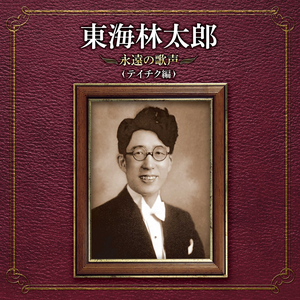
東海林太郎 永遠の歌声(テイチク編)
Tarō Shōji (東海林 太郎 Shōji Tarō, December 11, 1898 – October 4, 1972) was a Japanese popular ryūkōka singer. Shōji was born in Akita, Akita Prefecture. His father was an employee of the South Manchuria Railway, and his parents moved to Manchukuo, leaving him behind in Japan to be raised by his grandmother, who introduced him to the violin. He graduated from the Waseda University Department of Commerce, where he majored in Marxist economics. He married shortly before graduation from undergraduate studies, and was employed by the South Manchurian Railways Research Division on completion of his graduated degree in 1923. His main work at the South Manchurian Railways was on unionization; however, his highly leftist viewpoints alienated both his managers and the Imperial Japanese Army, and he found himself sidelined to a position in a library. After seven years in Manchukuo, he returned to Japan, where his brother was running a Chinese restaurant near Waseda University. Music career Shōji made his debut as a recording singer in 1933.[1] He attempted to become a Western classical baritone singer, but finally became a popular singer. His first major hit popular song Akagi no Komoriuta (赤城の子守唄 Akagi Lulaby) written about Kunisada Chūji. The song was released in 1934 and sold 400,000 copies. This song became a model for many lesser known singers in the 1930s and early 1940s about tragic or semi-tragic Japanese anti-heroes. From 1934 to 1936, the young actress Hideko Takamine and her mother lived with Shōji, although she refused his offer to formally adopt her. After World War II, many of his songs were banned by the American occupation forces as too nationalistic. In the 1960s, his popularity revived, riding a wave of nostalgia for songs of the early Shōwa period. Shōji appeared four times on the NHK Kōhaku Uta Gassen, starting with the first broadcast in 1951, followed by 1955, 1956 and 1965. He performed at the Asakusa International Theater in 1957 and in 1963 became honorary chairman of the Japan Vocalist Association in 1963. He was awarded the “special recognition” award at the Japan Record Awards in 1965 and the 4th class of the Order of the Rising Sun in 1969. Shōji suffered from cancer. However, he recovered from the illness in 1964. He died from cerebral hemorrhage in 1972. Read more on Last.fm. User-contributed text is available under the Creative Commons By-SA License; additional terms may apply.
Tarō Shōji (東海林 太郎 Shōji Tarō, December 11, 1898 – October 4, 1972) was a Japanese popular ryūkōka singer. Shōji was born in Akita, Akita Prefecture. His father was an employee of the South Manchuria Railway, and his parents moved to Manchukuo, leaving him behind in Japan to be raised by his grandmother, who introduced him to the violin. He graduated from the Waseda University Department of Commerce, where he majored in Marxist economics. He married shortly before graduation from undergraduate studies, and was employed by the South Manchurian Railways Research Division on completion of his graduated degree in 1923. His main work at the South Manchurian Railways was on unionization; however, his highly leftist viewpoints alienated both his managers and the Imperial Japanese Army, and he found himself sidelined to a position in a library. After seven years in Manchukuo, he returned to Japan, where his brother was running a Chinese restaurant near Waseda University. Music career Shōji made his debut as a recording singer in 1933.[1] He attempted to become a Western classical baritone singer, but finally became a popular singer. His first major hit popular song Akagi no Komoriuta (赤城の子守唄 Akagi Lulaby) written about Kunisada Chūji. The song was released in 1934 and sold 400,000 copies. This song became a model for many lesser known singers in the 1930s and early 1940s about tragic or semi-tragic Japanese anti-heroes. From 1934 to 1936, the young actress Hideko Takamine and her mother lived with Shōji, although she refused his offer to formally adopt her. After World War II, many of his songs were banned by the American occupation forces as too nationalistic. In the 1960s, his popularity revived, riding a wave of nostalgia for songs of the early Shōwa period. Shōji appeared four times on the NHK Kōhaku Uta Gassen, starting with the first broadcast in 1951, followed by 1955, 1956 and 1965. He performed at the Asakusa International Theater in 1957 and in 1963 became honorary chairman of the Japan Vocalist Association in 1963. He was awarded the “special recognition” award at the Japan Record Awards in 1965 and the 4th class of the Order of the Rising Sun in 1969. Shōji suffered from cancer. However, he recovered from the illness in 1964. He died from cerebral hemorrhage in 1972. Read more on Last.fm. User-contributed text is available under the Creative Commons By-SA License; additional terms may apply.
春の悲歌(エレジー)
国境の町
赤城の子守唄
麦と兵隊
旅笠道中
名月赤城山
野崎小唄
春の悲歌(エレジー)
むらさき小唄
上海の街角で
すみだ川
陣中髭くらべ
山は夕焼け
琵琶湖哀歌
オッペケペー節
湖底の故郷
東京節(パイノパイ)
あゝ草枕幾度ぞ
お駒恋姿
お夏清十郎
築地明石町
城ヶ島夜曲
高瀬舟
軍国舞扇
踏絵
戦場初舞台
鴨緑江節
赤城の子守歌
博多小女郎波枕
東京節(パイノパイ)
銀座尾張町
母に捧ぐる歌
お柳恋しや
土と兵隊
三味線やくざ
山は夕焼
綾乃の子守唄
さらば赤城よ
蒙古の町
吹雪の国境
流転祭り唄
恋慕しぐれ
小諸追分
椰子の実
煙草と兵隊
金色夜叉の歌
日暮の馬車
知取小唄
夜半の追憶
ダイナマイト節