label_stop_radio

La Java Bleue
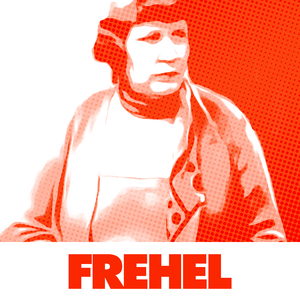
Fréhel, born Marguerite Boulc'h on July 13, 1891 – died February 3, 1951, was a French singer and actress. Born in Paris, France to a poor and dysfunctional family, Marguerite Boulc'h was a child left to a life on the streets in the dark side of Paris. In her teens she got a break when she met one of the female music-hall performers who heard her sing and introduced her to show business promoters. She began performing under the stage name Pervenche and soon met and married Robert Hollard, a performer who used the nom de guerre Roberty. Alcohol entered her life at an early age and her drinking became a problem for her husband. Their marriage did not last long and Boulc'h's husband left her for the Parisian singer, Damia. Fréhel then began a relationship with Maurice Chevalier but that too did not last long and after he left her for the much older megastar Mistinguett, the distraught girl, still only 19 years old, attempted suicide. Following her failed suicide attempt, in 1911 Marguerite Boulc'h tried to escape her pain and travelled to Bucharest, Romania and then to Russia where she remained for more than ten years. Lost in a world of alcohol and drugs, she returned to Paris in 1923 to a shocked public that saw the wasted shadow of the singer they had known and loved. She then signalled a new beginning by switching to the stage name Fréhel, taking the name from Cap Fréhel in Brittany where her parents had been born. Singing as Fréhel, at the Paris Olympia in 1924 she recaptured the former magic with a powerful performance and was soon headlining at the most popular venues in the country. Part of what is now referred to as the bal musette, Fréhel often sang accompanied by pipes and/or an accordion player. In the 1930s, she appeared in several motion pictures, almost always portraying a singer in a minor or supporting role. The most notable films in which she performed were 1931's De Coeur des Lilas, based on the Tristan Bernard play, and Pépé le Moko that starred Jean Gabin. While her alcohol abuse continued, she nevertheless was a major show business force of 1930s France. Of all her songs, her 1939 La Java Bleue, with music by Vincent Scotto, proved her most popular. Despite being one of Europe's most sought after performers, her destructive addictions led to her dropping out of sight for years. She never found the love she had sought for so long and died in 1951, a wretched drunk, alone in a hotel in Pigalle. She was interred in the Cimetière de Pantin, near Paris. Her 1934 recording Si tu n'étais pas là was featured in the 2001 soundtrack for the film Le Fabuleux Destin d'Amélie Poulain (Amélie). Some of Fréhel's best known songs: * Comme un moineau (1925) * Où est-il donc? (1926) * À la dérive (1932) * Où sont tous mes amants (1935) * Tel qu'il est (1936) * La der des der (1939) * La java bleue (1939) Films: * De Coeur des Lilas (1931) * La Rue sans nom (1934) * Le roman d'un tricheur (1936) * Pépé le Moko (1937) * L'Innocent (1937) * La Rue sans joie (1938) Read more on Last.fm. User-contributed text is available under the Creative Commons By-SA License; additional terms may apply.
Fréhel, born Marguerite Boulc'h on July 13, 1891 – died February 3, 1951, was a French singer and actress. Born in Paris, France to a poor and dysfunctional family, Marguerite Boulc'h was a child left to a life on the streets in the dark side of Paris. In her teens she got a break when she met one of the female music-hall performers who heard her sing and introduced her to show business promoters. She began performing under the stage name Pervenche and soon met and married Robert Hollard, a performer who used the nom de guerre Roberty. Alcohol entered her life at an early age and her drinking became a problem for her husband. Their marriage did not last long and Boulc'h's husband left her for the Parisian singer, Damia. Fréhel then began a relationship with Maurice Chevalier but that too did not last long and after he left her for the much older megastar Mistinguett, the distraught girl, still only 19 years old, attempted suicide. Following her failed suicide attempt, in 1911 Marguerite Boulc'h tried to escape her pain and travelled to Bucharest, Romania and then to Russia where she remained for more than ten years. Lost in a world of alcohol and drugs, she returned to Paris in 1923 to a shocked public that saw the wasted shadow of the singer they had known and loved. She then signalled a new beginning by switching to the stage name Fréhel, taking the name from Cap Fréhel in Brittany where her parents had been born. Singing as Fréhel, at the Paris Olympia in 1924 she recaptured the former magic with a powerful performance and was soon headlining at the most popular venues in the country. Part of what is now referred to as the bal musette, Fréhel often sang accompanied by pipes and/or an accordion player. In the 1930s, she appeared in several motion pictures, almost always portraying a singer in a minor or supporting role. The most notable films in which she performed were 1931's De Coeur des Lilas, based on the Tristan Bernard play, and Pépé le Moko that starred Jean Gabin. While her alcohol abuse continued, she nevertheless was a major show business force of 1930s France. Of all her songs, her 1939 La Java Bleue, with music by Vincent Scotto, proved her most popular. Despite being one of Europe's most sought after performers, her destructive addictions led to her dropping out of sight for years. She never found the love she had sought for so long and died in 1951, a wretched drunk, alone in a hotel in Pigalle. She was interred in the Cimetière de Pantin, near Paris. Her 1934 recording Si tu n'étais pas là was featured in the 2001 soundtrack for the film Le Fabuleux Destin d'Amélie Poulain (Amélie). Some of Fréhel's best known songs: * Comme un moineau (1925) * Où est-il donc? (1926) * À la dérive (1932) * Où sont tous mes amants (1935) * Tel qu'il est (1936) * La der des der (1939) * La java bleue (1939) Films: * De Coeur des Lilas (1931) * La Rue sans nom (1934) * Le roman d'un tricheur (1936) * Pépé le Moko (1937) * L'Innocent (1937) * La Rue sans joie (1938) Read more on Last.fm. User-contributed text is available under the Creative Commons By-SA License; additional terms may apply.
Si Tu N'Étais Pas Là
Si tu n'étais pas là
La java bleue
La Der Des Der
Chanson tendre
Comme un moineau
La coco
Tel qu'il est
L'amour des hommes
Musette
Où sont tous mes amants ?
Le grand léon
A la dérive
C'est un Mâle
La chanson des Fortifs
Ou Est-Il Donc ?
Sans lendemain
Si tu n'étais pas là - Mix From "Amelie from Montmartre"
Où sont tous mes amants?
Sous la blafarde
Où sont tous mes amants
Pauvre grand
Où sont mes amants?
L'obsédé
Maison louche
Si tu n'etais pas la
Comme une fleur
Rien ne vaut l'accordéon
Je n'attends plus rien
La valse à tout le monde
Et v'la pourquoi
Où sont mes amants ?
Les filles qui la nuit
La môme catch-catch
Pleure
Où est-il donc ?
Le fils de la femme poisson
La chanson du vieux marin
C'est la valse des costauds
Derrière la clique
La vraie de vraie
Où est-il donc?
Quand On A Trop De Coeur
Ou Sont Mes Amants?
Si tTu N'Étais Pas Là
C'est un petit bal musette
Il est trop tard
Sous les ponts
Tout change dans la vie
Où est-il donc