label_stop_radio

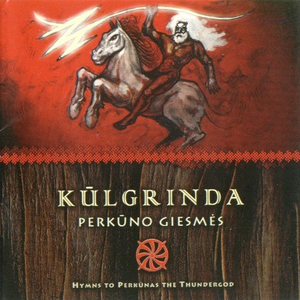
Perkūno Giesmės
The ritual folk group Kūlgrinda first came together in 1990, at the time of Lithuanian national rebirth. The founders - Inia and Jonas Trinkunas remain the leaders of this group. In 1997, Jonas Trinkunas has received the national J. Basanavičius award for the fostering of traditional Lithuanian culture. During the Soviet period, he was one of the main participants of the Ramuva cultural movement, as well as one of the founders of the Vilnius University Ramuva folk culture movement. He is the author and editor of the book Of Gods and Holidays, The Baltic heritage, Vilnius, 1999. He works at the Lithuanian Institute for Social Sciences, and is a member of the Council for the preservation of ethnic culture to the Lithuanian Parliament. He has experience of directing various folk ensembles - the Žiūrai village ensemble (which has recently celebrated its 30th anniversary), the Sadauja ensemble, the Vilnius Institute of Art ensemble, and others. The sound of young voices saturates Kūlgrinda. Most of the members of the group are girls and boys between 17 and 25 years of age, wearing clothes of the 10-12 century Lithuania, as reconstructed form archeological finds, common features are - brass jewelry, sashes woven with traditional symbols. Kūlgrinda performs wedding, christening and other family and calendar holiday ceremonies according to Lithuanian tradition. The ceremonies are usually performed in Vilnius, on the Duke Gediminas burial hill, in the Verkiai park by the Lizdeika altar, in Kernavė, and on other castle-mounds and sacral hills, in nature and indoors. Kulgrinda is invited to various national ceremonies in Vilnius and in other cities. As Kūlgrinda specializes in traditional rituals and ceremonies, it has participated in state events. Notable is the group's participation in consecrating the Lithuanian President's flag in 1993. Read more on Last.fm. User-contributed text is available under the Creative Commons By-SA License; additional terms may apply.
The ritual folk group Kūlgrinda first came together in 1990, at the time of Lithuanian national rebirth. The founders - Inia and Jonas Trinkunas remain the leaders of this group. In 1997, Jonas Trinkunas has received the national J. Basanavičius award for the fostering of traditional Lithuanian culture. During the Soviet period, he was one of the main participants of the Ramuva cultural movement, as well as one of the founders of the Vilnius University Ramuva folk culture movement. He is the author and editor of the book Of Gods and Holidays, The Baltic heritage, Vilnius, 1999. He works at the Lithuanian Institute for Social Sciences, and is a member of the Council for the preservation of ethnic culture to the Lithuanian Parliament. He has experience of directing various folk ensembles - the Žiūrai village ensemble (which has recently celebrated its 30th anniversary), the Sadauja ensemble, the Vilnius Institute of Art ensemble, and others. The sound of young voices saturates Kūlgrinda. Most of the members of the group are girls and boys between 17 and 25 years of age, wearing clothes of the 10-12 century Lithuania, as reconstructed form archeological finds, common features are - brass jewelry, sashes woven with traditional symbols. Kūlgrinda performs wedding, christening and other family and calendar holiday ceremonies according to Lithuanian tradition. The ceremonies are usually performed in Vilnius, on the Duke Gediminas burial hill, in the Verkiai park by the Lizdeika altar, in Kernavė, and on other castle-mounds and sacral hills, in nature and indoors. Kulgrinda is invited to various national ceremonies in Vilnius and in other cities. As Kūlgrinda specializes in traditional rituals and ceremonies, it has participated in state events. Notable is the group's participation in consecrating the Lithuanian President's flag in 1993. Read more on Last.fm. User-contributed text is available under the Creative Commons By-SA License; additional terms may apply.
4square
Aberjaber
Abscondo
Accordzéâm
Trys bitulės
Pulkun Pulkun
Čiūto, Čiūto, Čiūtyta Čiūto
Čiūtyta
Turėja Liepa Liaj Taduvėla
Ar Ti Pa Goju
Kalnuti Ritato
Vidury lauko
Snaudala
Kalė kalė genelis
Didysie mūsų
Seniai buvau
Šaly kelio jovaras stovėjo
Dega ugnelė
Jorja Geras Vakaras
Ūžuolalis Auga Tėvelia Pakluonėj
Sodauto Rūta Sodauto
Dūno upė
Lioj Sese Lioj Pana
Išmivedi Vedi
Dai Aš Nuveisiu
Dūzgia bitelė dūzgia
Skranc bitela
Kanklės
Oi kalnas kalnas
Rimo rimo tūta
Tykiai tykiai Nemunėlis teka
Už stalo sėdau
Ko tu bitelė
Dijūta kalnali
To To Stovė Oželis
Ričiau rotų
Kada buva kadujo, geri metai kadujo
Aš kanapį sėjau
Jori, Šildyk Žamį
Žalioj Girioj
Žemynos Kanklės
Išsivedžiau Oželį Taitėla
Ėjau rytelia čiūta
Apėja sauliūte
Lygiam Lauki Paklalnėlėi
Mila Swaiksta Saulika
Lygiam lauki pakalnėlėj
Jori, šildyk žamį
Saulika Patekka, Daulelu Lelu
Nuslaide Saulala
Dai Lakštava Lakštute In Marių
Dai aš nueisiu
Kur Sakuolalis Ten Gegiutala
Laduto laduto