label_stop_radio

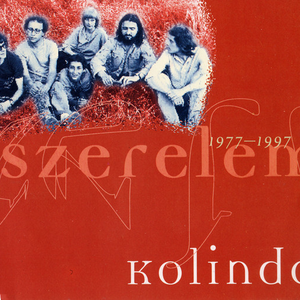
Szerelem 1977-1997
Kolinda plays complex folk music with diverse instrumentation and with medieval and Eastern influences. They lived in France for a time, and were produced by Hughes de Courson of the French folk group Malicorne. Kolinda disbanded in 1979, only to reform five years later. After playing as a group for 11 out of the past 16 years, with 7 albums under their belts, Kolinda is still relatively unknown in their native Hungary and virtually unheard of in North America. They're one of the most interesting European groups that I've heard, says Gary Cristall, organizer of the Vancouver Folkfestival, but they do it in a different way. Even though they were doing traditional stuff, it had a different edge to it. They've never been looked on very favorably in Hungary. They were always a little too far outside. Kolinda's reputation for being outside comes from the way they mix elements of Hungarian and Balkan folksongs with a large amount of jazz, a bit of classical, and even a few notes of rock. Their music manages to melt the passion and urgency of gypsy music with the cerebral with of cool jazz, an exciting combination that makes them one of the most successful hybrids of folk and contemporary music around today. Kolinda first formed in 1974, and in the next four years they released three albums on the French Hexagone label. But in 1978 the group disbanded and the members went on to other projects. In 1984, the group got together for a reunion tour. They've been playing together ever since, and have recorded four albums. But even with their diverse sources of inspiration , Kolinda never sounds contrived. While other ethnofusion bands often seem like a patchwork of styles and cultures - contemporary instrumentation precariously and arbitrarily tacked on to ethnic folk music - Kolinda always sounds inevitable. They weave all their various influences together so seamlessly that it somehow seems as if it could be no other way. Their sounds is a solid, unified whole that blends fervor and freshness without a hint of artifice. Read more on Last.fm. User-contributed text is available under the Creative Commons By-SA License; additional terms may apply.
Kolinda plays complex folk music with diverse instrumentation and with medieval and Eastern influences. They lived in France for a time, and were produced by Hughes de Courson of the French folk group Malicorne. Kolinda disbanded in 1979, only to reform five years later. After playing as a group for 11 out of the past 16 years, with 7 albums under their belts, Kolinda is still relatively unknown in their native Hungary and virtually unheard of in North America. They're one of the most interesting European groups that I've heard, says Gary Cristall, organizer of the Vancouver Folkfestival, but they do it in a different way. Even though they were doing traditional stuff, it had a different edge to it. They've never been looked on very favorably in Hungary. They were always a little too far outside. Kolinda's reputation for being outside comes from the way they mix elements of Hungarian and Balkan folksongs with a large amount of jazz, a bit of classical, and even a few notes of rock. Their music manages to melt the passion and urgency of gypsy music with the cerebral with of cool jazz, an exciting combination that makes them one of the most successful hybrids of folk and contemporary music around today. Kolinda first formed in 1974, and in the next four years they released three albums on the French Hexagone label. But in 1978 the group disbanded and the members went on to other projects. In 1984, the group got together for a reunion tour. They've been playing together ever since, and have recorded four albums. But even with their diverse sources of inspiration , Kolinda never sounds contrived. While other ethnofusion bands often seem like a patchwork of styles and cultures - contemporary instrumentation precariously and arbitrarily tacked on to ethnic folk music - Kolinda always sounds inevitable. They weave all their various influences together so seamlessly that it somehow seems as if it could be no other way. Their sounds is a solid, unified whole that blends fervor and freshness without a hint of artifice. Read more on Last.fm. User-contributed text is available under the Creative Commons By-SA License; additional terms may apply.
Abscondo
Accordzéâm
Adas
Adiafa
Bolgár Kitérö
Szerelem
Ilju Haramia
Peter Barna
Kantata (Cantate Populaire)
Szerelem (L'amour)
Gyongy Virag / Kerek a Slolo
Duda notak (Airs de cornemuse)
Somogyi ugros (Danses à sauts de la transdanubie)
Menyasszony
Menyasszony (Airs de noces de Szek)
Kantáta
Kantata
Gymesi dalokes tancok (Airs csangos)
Szeki tancrend (Ordre de danses de Szek)
Rabenek (Chant des prisonniers)
Duda Notak
Tanc
Csodafiu szarvas
Somogyi Ugros
Számum
1514
Szerelem (II)
Szeki Tancrend
Rabenek
Nyolcsoros
Toredekek
Tánc
Körtánc
Gigany hallgato
Gyongy Virag/Kerek a slolo
Ilju
Pastor Ludens
Somogyi ugrós
Tranzit
Széki táncrend
Napforduló
Töredék
Gymesi dalok es tangok
Jatekos (I)
Rabének
Zerelem
Ráolvasás
Harom arva
Korai leltár
Duda-Nóták
Három árva
Barna Péter
Dorombének
Aztakartam