label_stop_radio


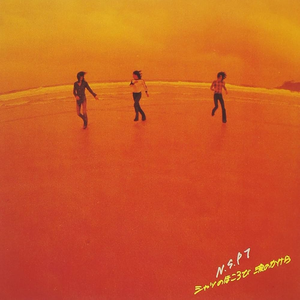
シャツのほころび涙のかけら
N.S.P (AKA NSP, ニュー・サディスティック・ピンク/New Sadistic Pink is/was a Japanese folk trio from Iwate which formed in 1972, split up in 1987 and has been active again since 2002. Members: ** Vocals & Guitar: 天野滋 (Shigeru Amano; * May 5th 1953, + July 1st 2005) ** Vocals & Guitar: 中村貴之 (Takayuki Nakamura; * June 12th 1953, + November 27th 2021; later in スリーハンサムズ/Three Handsomes) ** Vocals & Bass: 平賀和人 (Kazuto Hiraga; * June 1st 1954; later in スリーハンサムズ/Three Handsomes) History: During their amateur days, they performed under the name ニュー・サディスティック・ピンク (New Sadistic Pink) focusing primarily on rock music. As the band name did not align with their folk-oriented musical style, they adopted the name N.S.P (later NSP) upon their major-label debut. During an event marking their seventh anniversary, a contest to devise a new interpretation for the name NSP resulted in the winning entry: Neko, Saru, Penguin (Cat, Monkey, Penguin). Later, phrases such as Non Stop Progression, Natural Spirit Paradise, and Nasa Shopping Plaza were also used as catchphrases for the group. Alongside the group Fukinotou, NSP is considered a leading representative of lyrical folk (jojō-ha folk) and helped pave the way for the debut of numerous other groups in the same genre. In 1972, Amano and Hiraga—who had been part of a group called Sadistic Pink—joined forces with Nakamura, who had previously been active in a different band, to form New Sadistic Pink. Some of the group's classmates—who were audio enthusiasts—recorded a live performance by Cafe NSP at the technical college festival. They submitted this demo tape to the FM Request Hour program on NHK Morioka, where it was broadcast and subsequently held the number-one spot for 11 consecutive weeks. In 1973, while still attending the technical college, the group entered the 5th Yamaha Popular Song Contest. Their song Ase (Sweat) won the Nippon Broadcasting System Award, and in June of that year, they made their professional debut with the song Sayounara (Goodbye). Upon graduating from the college in 1974, they moved to Tokyo. Shigeru Amano later explained that NSP’s path to becoming a professional act began when he and his friends were performing at events like school festivals; a record company approached them, offering to produce a record for them at no cost. In 1974, their song Yuugure-doki wa Sabishisou (It Feels Lonely at Twilight) became a major hit, reaching number 11 on the Oricon charts, while their album *NSP III: Hitoyasumi* (A Short Break)—released the same year—peaked at number 4. They continued to see success, notably with the 1976 hit Akai Ito no Densetsu (Legend of the Red Thread), establishing themselves as a quintessential lyrical folk group. As the 1980s began, the members increasingly pursued solo projects, including songwriting and production work. In 1985, Takayuki Nakamura left the group. Although the remaining members continued by bringing in Taisuke Sawachika and Akihiko Fukaura, the group ceased activities in 1987 following the departure of Kazuto Hiraga. Shigeru Amano subsequently launched a solo career. Hiraga joined Pony Canyon—the record label to which NSP had been signed—as a director, overseeing projects for artists such as Airi Hiramatsu, GO-BANG'S, Asaka Seto, and the group Melody. In 2002, the original members reunited, holding their first comeback concert on January 26 at the Nippon Seinenkan Hall. Tickets for the event sold out in just one hour. In February 2005, the group released a new single, Mizu no Sei Datta N desu (It Was Because of the Water)—their first new song in 19 years—along with an album titled *Radio Days*. On July 1st 2005 the group's leader Shigeru Amano, passed away from a cerebral hemorrhage while in the hospital for medical treatment. Even while battling colon cancer, Amano had continued to participate in national tours and other group activities. In June 2008, Takayuki Nakamura began a solo career and released a mini-album. Since March 20, 2019, the song Yūgure-doki wa Sabishisō (It Feels Lonely at Twilight) has been used as the departure melody at Ichinoseki Station on the Tohoku Shinkansen line. On July 1, 2019, an N.S.P Memorial Spot was established on the embankment of the Iwai River—the setting that inspired the song Yūgure-doki wa Sabishisō. Nakamura passed away from lung cancer on November 27, 2021. He was also active in the band スリーハンサムズ (Three Handsomes) alongside Hiraga and 細坪基佳 (Motoyoshi Hosotsubo). In November 2022, he was honored by Ichinoseki City for his contributions to the community (specifically in the fields of education and culture). Labels: Canyon Records/AARD-VARK, Nippon Crown, Yamaha Music Communications; Management: Yamaha Music Foundation, NSP Office Read more on Last.fm. User-contributed text is available under the Creative Commons By-SA License; additional terms may apply.
4square
Aberjaber
Abscondo
Accordzéâm
夕暮れ時はさびしそう
さようなら
八十八夜
赤い糸の伝説
あせ
北北東の風
雨は似合わない
弥生つめたい風
歌は世につれ
線香花火
面影橋
めぐり逢いはすべてを越えて
ゆうやけ
あなたこっちを振り向いて
八月の空へ翔べ
愛のナイフ
遠野物語
はじまりは朝
かげふみ
Rain
コンクリートの壁にはさまれて
白い椅子の陰
青い涙の味がする
OZ Theme 2001
Спри да ме наричаш гей
Fly To The Moon
シャツのほころび涙のかけら
未来
チケット握り締めて
夕暮れ時は淋しそう
そんな季節に口づけを
如月の詩
避暑地にて
碧き空は永遠に
海に寄せて
漁り火
浮雲
あの夜と同じように
Night Drone
愛のロジック~論理~
冬の花火はおもいで花火
シャンテの街
解读不能 [TV Code Geass 反叛的鲁路修 2nd OP]
春はもうすぐ
見上げれば雲か
新青春
バブル -Jに捧ぐ-
風の旋律
いい
ひとりだちのすすめ