label_stop_radio

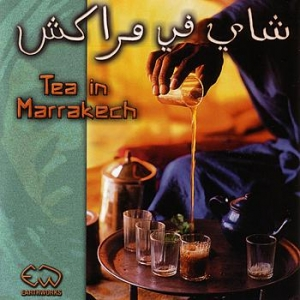
Tea In Marrakech
Rasha is a mononym of Rasha Sheikh Eldin (b. 1971, Khartoum, Sudan), who grew up in Sudan's capital, where the Islamic Nubian and Black African musical worlds collide. She comes from a musical family, one of twenty children. Rasha emigrated to Spain a decade ago to escape the volatile civil war raging between Sudan's Muslim population in the north and its Christian and animist population in the south. Spain is also the home of Rasha's brother, Wafir, a member of the critically acclaimed Radio Tarifa. It was in Spain that Rasha began work on the critically acclaimed album, Sudaniyat (named by Folk Roots editor Ian Anderson as One of the 10 best of 1997). This album brings together the diversity of Sudanese music, ranging from Arabic poetry, sufi music and even touches of reggae. The tone of this tender album is set primarily by the Oud and percussion, with backing guitar and bass that magnificently accentuate Rasha's spectacular vocals. Thrown into the mix are violins, accordions and a Sudanese big band. I've always wanted to introduce my native music to a broader public and at the same time not limit it to the strictly traditional themes, she explains. Sudan's music is incredibly diverse and differs in many ways from all other 'African' music: it is not as distinctly rhythmic and danceable - even though it is full of complex rhythms - but puts more emphasis on melody. It is more melancholic; it sounds downright sad. And even though it is, at a first glance, very similar to Arabic music, Sudanese music is different - a mixture of both, and yet unlike either of them. Another key feature of Rasha's work is her dedication to social justice, women's rights, and human rights for refugees. Rasha performed at the United Nation's Working Women's Day Celebration in 1998. She also traveled to the Saharawi refugee camps in Algeria to raise awareness of the tens of thousands of Western Sahara refugees that have been trapped there for more than two decades. Sites: Discogs and Gl.Wikipedia Read more on Last.fm. User-contributed text is available under the Creative Commons By-SA License; additional terms may apply.
Rasha is a mononym of Rasha Sheikh Eldin (b. 1971, Khartoum, Sudan), who grew up in Sudan's capital, where the Islamic Nubian and Black African musical worlds collide. She comes from a musical family, one of twenty children. Rasha emigrated to Spain a decade ago to escape the volatile civil war raging between Sudan's Muslim population in the north and its Christian and animist population in the south. Spain is also the home of Rasha's brother, Wafir, a member of the critically acclaimed Radio Tarifa. It was in Spain that Rasha began work on the critically acclaimed album, Sudaniyat (named by Folk Roots editor Ian Anderson as One of the 10 best of 1997). This album brings together the diversity of Sudanese music, ranging from Arabic poetry, sufi music and even touches of reggae. The tone of this tender album is set primarily by the Oud and percussion, with backing guitar and bass that magnificently accentuate Rasha's spectacular vocals. Thrown into the mix are violins, accordions and a Sudanese big band. I've always wanted to introduce my native music to a broader public and at the same time not limit it to the strictly traditional themes, she explains. Sudan's music is incredibly diverse and differs in many ways from all other 'African' music: it is not as distinctly rhythmic and danceable - even though it is full of complex rhythms - but puts more emphasis on melody. It is more melancholic; it sounds downright sad. And even though it is, at a first glance, very similar to Arabic music, Sudanese music is different - a mixture of both, and yet unlike either of them. Another key feature of Rasha's work is her dedication to social justice, women's rights, and human rights for refugees. Rasha performed at the United Nation's Working Women's Day Celebration in 1998. She also traveled to the Saharawi refugee camps in Algeria to raise awareness of the tens of thousands of Western Sahara refugees that have been trapped there for more than two decades. Sites: Discogs and Gl.Wikipedia Read more on Last.fm. User-contributed text is available under the Creative Commons By-SA License; additional terms may apply.
Sammany
Azara Alhai
Azara Al Hay
Leali
Aguis Mahasnik Biman
Sólida
Salib fuadi (you stole my heart)
Sufoco
Salib fuadi
Salib Faudi
Boa Sorte
Diya Wo Ailan
Nari
Ia Sudan Ma'alesh
Aquis Mahasnik Biman
Máquinas
Logo Atrás
Hadada
Afta'h albab
Aguis mahasnik biman 2
Monorritmia
Ar
Altar do Delírio
Tumadir
Azara alhai (Mozas del barrio)
Mal da Palavra
Interlúdio
Continuum
Ashej Seyaró
Shaib almiiray
Blue Sudan Blues
Leap
Leali (Sudan)
Ash'ab
4. Salib Faudi
Azara alhay
Entre dos mares
Ummi
My girl
Najmeen
Agius Mahasnik Biman (Sudan)
How to Make an Entrance
Let Me Be
Your bloody kingdom
Azara Alhai (Sudan)
Giraffe
Darira
Aquis Mahsalnik Biman
Commitment (feat. Nelson Miller & Verzache)
N'na dau un beijo
Salib fuadi (Has cautivado mi alma)