label_stop_radio

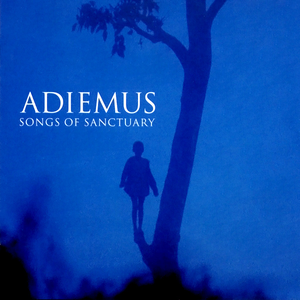
Songs of Sanctuary
Adiemus consists of the Welsh composer Karl Jenkins and his Finnish Adiemus Singers. The session singer Miriam Stockley performed the vocal parts on the first four albums. Additional vocals were provided by Mary Carewe on all but Dances of Time, which saw the introduction of the Finnish Adiemus Singers (who would later reappear on Vocalise). Extra vocals and the chorus effects were created by overdubbing multitracked recordings of the singers (in some cases up to forty times) and varying the speed of the tape. Stockley was described by Jenkins as central to the Adiemus project due to her range and intonation, however for reasons that remain unclear she was not re-engaged for Vocalise. The Songs of Sanctuary orchestra consisted of a string section augmented by various ethnic percussion instruments, with occasional further additions such as bells, a recorder and a quena. Mike Ratledge, with whom Jenkins had played in Soft Machine, contributed to the first album as well. Jenkins added brass and woodwind for Cantata Mundi, and continued to add more diverse instruments such as acoustic guitar on later albums. From Songs of Sanctuary to Dances of Time, the London Philharmonic Orchestra was used; Jenkins later formed his own Adiemus Orchestra to perform on The Eternal Knot recordings, returning to the LPO for Vocalise. Read more on Last.fm. User-contributed text is available under the Creative Commons By-SA License; additional terms may apply.
Adiemus consists of the Welsh composer Karl Jenkins and his Finnish Adiemus Singers. The session singer Miriam Stockley performed the vocal parts on the first four albums. Additional vocals were provided by Mary Carewe on all but Dances of Time, which saw the introduction of the Finnish Adiemus Singers (who would later reappear on Vocalise). Extra vocals and the chorus effects were created by overdubbing multitracked recordings of the singers (in some cases up to forty times) and varying the speed of the tape. Stockley was described by Jenkins as central to the Adiemus project due to her range and intonation, however for reasons that remain unclear she was not re-engaged for Vocalise. The Songs of Sanctuary orchestra consisted of a string section augmented by various ethnic percussion instruments, with occasional further additions such as bells, a recorder and a quena. Mike Ratledge, with whom Jenkins had played in Soft Machine, contributed to the first album as well. Jenkins added brass and woodwind for Cantata Mundi, and continued to add more diverse instruments such as acoustic guitar on later albums. From Songs of Sanctuary to Dances of Time, the London Philharmonic Orchestra was used; Jenkins later formed his own Adiemus Orchestra to perform on The Eternal Knot recordings, returning to the LPO for Vocalise. Read more on Last.fm. User-contributed text is available under the Creative Commons By-SA License; additional terms may apply.
Adiemus
Hymn
Cantus Inaequalis
Kayama
In Caelum Fero
Cantus Insolitus
Cantus Iteratus
Tintinnabulum
Rain Dance
Elegia
Amaté Adea
Beyond The Century
Cantilena
Zarabanda (Saraband)
Chorale I (Za Ma Ba)
Corrente (Courante)
Dawn Dancing
Adiemus (1999 New Version)
Chorale II (Roosh Ka Ma)
Palace Of The Crystal Bridge
Kayama (Radio Edit)
Cantus - Song of Tears
Ein Wiener Walzer (A Viennese Waltz)
African Tango
Saint Declan's Drone
The Eternal Knot
Chorale VII (A Ma Ka Ma)
Hermit Of The Sea Rock
Minuet
Chorale IV (Alame Oo Ya)
In Caelum Fero (Radio Edit)
Chorale V (Arama Ivi)
Hymn To The Dance
King Of The Sacred Grove
Math Was A Wizard
Children Of Dannu
The Dagda
Connla's Well
Isle Of The Mystic Lake
Rain Dance (edit)
Ceridwen's Curse
Dos A Dos (Square Dance)
La La La Koora (Ländler)
Cantus - Song of the Plains
Cantus - Song Of The Plains (Edit)
Kaya Kakooya (Rumba)
Cantus - Song Of The Spirit
Cu Chullain
Chorale VI (Sol Fa)/Cantus - Song Of Aeolus
La La La Koora (landler)