label_stop_radio

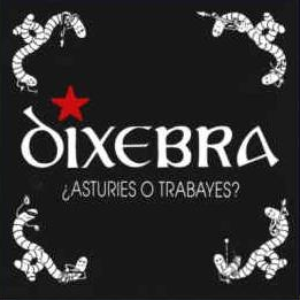
¿Asturies o Trabayes?
Dixebra. from Avilés, Spain started mixing traditional elements of the asturian music (which is a variant of the celtic music played in the lowlands) with punk, ska, reggae and lately hardcore and rock. Perhaps the most important traditional element in their music is the asturian bagpipe and the use of the asturian language in their lyrics. Their early albums could be compared to those of The Clash, or to give a closer referent, Kortatu. The subjects of their lyrics are derived from an historically depressed (post-industrial / post-civil war) area of Spain, Asturias; the themes revolve around worker's classes, produced by the precarious state of affairs in Asturias after a strong industry restructuring. The underlying uncertain future awaiting Asturias is a recurring theme. They also support in their songs the Asturian language largely, given that is not official in the Spanish state, although it is in Portugal. Humor, protest, defense of indigenous culture and the incitation to act in order to change the actual state of affairs locally resumes the intentions of their lyrics and music. After being playing for over 20 years Dixebra has become a reference band in the asturian rock history for several reasons; perhaps the most important is the fact of singing in asturian language, and their honesty as musicians,running their own independent label (https://root.theworkpc.com/music/preview?img=http://www.laguanaz.com/) signing young bands and giving them the chance to express themselves without falling in hands of a major multinationals. Read more on Last.fm. User-contributed text is available under the Creative Commons By-SA License; additional terms may apply.
Dixebra. from Avilés, Spain started mixing traditional elements of the asturian music (which is a variant of the celtic music played in the lowlands) with punk, ska, reggae and lately hardcore and rock. Perhaps the most important traditional element in their music is the asturian bagpipe and the use of the asturian language in their lyrics. Their early albums could be compared to those of The Clash, or to give a closer referent, Kortatu. The subjects of their lyrics are derived from an historically depressed (post-industrial / post-civil war) area of Spain, Asturias; the themes revolve around worker's classes, produced by the precarious state of affairs in Asturias after a strong industry restructuring. The underlying uncertain future awaiting Asturias is a recurring theme. They also support in their songs the Asturian language largely, given that is not official in the Spanish state, although it is in Portugal. Humor, protest, defense of indigenous culture and the incitation to act in order to change the actual state of affairs locally resumes the intentions of their lyrics and music. After being playing for over 20 years Dixebra has become a reference band in the asturian rock history for several reasons; perhaps the most important is the fact of singing in asturian language, and their honesty as musicians,running their own independent label (https://root.theworkpc.com/music/preview?img=http://www.laguanaz.com/) signing young bands and giving them the chance to express themselves without falling in hands of a major multinationals. Read more on Last.fm. User-contributed text is available under the Creative Commons By-SA License; additional terms may apply.
Accolade
Agapanthos
Bergtatt
Bots
Mañana Fría
Indios
Pallabres Vieyes
Nun Llores
La Danza
Esto ye Asturies
Rapaza nacionaliega
Dime Cómo Ye
Nesti mundu traidor
Skandalera
Grieska
Queda la Rabia
Canciu D'Amor
La Partida
Duérmete Neñu
Merucu xusticieru
Ezeiza
Vaqueira
Gaiteiro
Cañicón
Nesti Mundiu Traidor
Vientu na Cara
Asturalia
Wilma Loulé
La Memoria
Nun Puxa
Tolos cartelos
El Mineru
El manteru
Brenga Celta
Si Vienes
Xuacu Xinta Xorra
Zapatista
Amor incendiariu
Salú Ya Dixebra
Da-yos Caña
Canciu d´amor
Pan y Roses
Muammar
Amnesia
Mañana Fría - En Directo
Llaciana Asturiana
Puta Vida
L'Idiota
XENTE
Kuenka Chunga
Movidina uvieina
Dacuandu
Búscate a ti Mesmu
Rufu