label_stop_radio

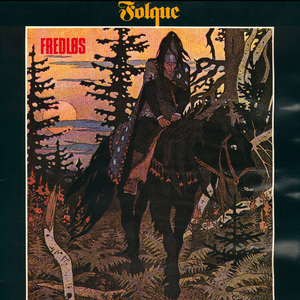
Fredløs
Folque formed in Oslo in 1972 with the aim of making a Norwegian form of folk-rock, using guitars and banjos instead of the traditional treatment with Hardanger fiddle or solo vocals. Their first album, ‘Folque’ (1974), also included adaptations of two Scottish folk songs (among them Allison Gross in a similar arrangement to the 1973 Steeleye Span version, although with Norwegian lyrics), but for the future they stuck to Scandinavian material. For this reason, ‘Kjempene På Dovrefjell’ (1975) and ‘Vardøger’ (1977) are usually considered their best albums, offering great insight into Norwegian folklore, i.e. medieval ballads, old Norse poems set to music, fiddle instrumentals and traditional dance music. Their musical ability is impeccable, highlighting fiddle, mandolin, dulcimer and electric guitars. The arrangements always function well, meaning that the bass and drums do not disturb the original rhythm and rhymes. On top of this, Lisa Helljesen had a clear and strong voice (a bit similar to Maddy Prior in Steeleye Span and Mandy Morton in The Spriguns), perfectly suitable to the music. There is no better starting place than ‘Vardøger’, where their own blend of folk-rock was fully developed. After some personnel changes, Folque signed to the political left-wing label Mai after their Philips contract expired. Jørn Jensen and Trond Villa were later involved in Kong Lavring and the group Folk & Rackare (along with Swedish musicians). ‘Dans, Dans Olav Liljekrans’ (1978) revealed the new line-up to be as musically competent as the previous one, but the new female vocalist Jenn E. Mortensen had a rougher voice (and a strong North-Norwegian regional accent) that might be disturbing to those who dislike her more aggressive attitude (less suitable to Folque's music, in my opinion). ‘Fredløs’ was a transitional record with a wider musical span than their previous records. Their last two original albums contained increasing numbers of self-penned compositions, ‘Sort Messe’ (1982) being dominated by the competent songwriting of Morten Bing. Folque were undoubtedly the most influential Norwegian folk-rock band and arguably among the best in Europe, on a par with Malicorne in France or Ougenweide in Germany. Read more on Last.fm. User-contributed text is available under the Creative Commons By-SA License; additional terms may apply.
Folque formed in Oslo in 1972 with the aim of making a Norwegian form of folk-rock, using guitars and banjos instead of the traditional treatment with Hardanger fiddle or solo vocals. Their first album, ‘Folque’ (1974), also included adaptations of two Scottish folk songs (among them Allison Gross in a similar arrangement to the 1973 Steeleye Span version, although with Norwegian lyrics), but for the future they stuck to Scandinavian material. For this reason, ‘Kjempene På Dovrefjell’ (1975) and ‘Vardøger’ (1977) are usually considered their best albums, offering great insight into Norwegian folklore, i.e. medieval ballads, old Norse poems set to music, fiddle instrumentals and traditional dance music. Their musical ability is impeccable, highlighting fiddle, mandolin, dulcimer and electric guitars. The arrangements always function well, meaning that the bass and drums do not disturb the original rhythm and rhymes. On top of this, Lisa Helljesen had a clear and strong voice (a bit similar to Maddy Prior in Steeleye Span and Mandy Morton in The Spriguns), perfectly suitable to the music. There is no better starting place than ‘Vardøger’, where their own blend of folk-rock was fully developed. After some personnel changes, Folque signed to the political left-wing label Mai after their Philips contract expired. Jørn Jensen and Trond Villa were later involved in Kong Lavring and the group Folk & Rackare (along with Swedish musicians). ‘Dans, Dans Olav Liljekrans’ (1978) revealed the new line-up to be as musically competent as the previous one, but the new female vocalist Jenn E. Mortensen had a rougher voice (and a strong North-Norwegian regional accent) that might be disturbing to those who dislike her more aggressive attitude (less suitable to Folque's music, in my opinion). ‘Fredløs’ was a transitional record with a wider musical span than their previous records. Their last two original albums contained increasing numbers of self-penned compositions, ‘Sort Messe’ (1982) being dominated by the competent songwriting of Morten Bing. Folque were undoubtedly the most influential Norwegian folk-rock band and arguably among the best in Europe, on a par with Malicorne in France or Ougenweide in Germany. Read more on Last.fm. User-contributed text is available under the Creative Commons By-SA License; additional terms may apply.
4square
Abscondo
Accordzéâm
Adas
Harpa
Ravnene
Reinlender
Skjøn Jomfru
Springar
Sinclairvise
Nissedans
Alison Gross
Reven Og Bjørnen
Heimat Låta
Steffa Går Til Selfjord
Sjugur og Trollsbrura
Reinlender fra Vingelen
Heming Og Harald Kongjen
Jarlen Av Murray
Stev
Dansevise
No Har Jonsoknatta Kome
Hjuringstev
Halling
Juljeitsån
Sjugur Og Trollsbrua
Liti Kjersti og alvekongen
Rei'ar Med Buttulen
Fanteguten
Heming Og Gyvri
Huldra Og Elland
Felerier
Inn Kom'n Tore
No ha Jonsoknatta kome
Beiarblakkjen
Bruregangar
Varulv
Veslejenta/Kvernjenta
Kjempene På Dovrefjell
Den Gode Grønne Skogen
Herr Verner I Fangetårnet
Sidsel og Monas vals
Sæterreise
Dans, Dans Olav Liljekrans
Reinlender & Ril
Æ'kje Gutane
Eg Vil Ingjen Spelemann Ha
Eg nil ingjen spelemann ha
Åleina
Gjevre-valsen
Tel dæ
Nøkken
Holterilen
Gesellvise