label_stop_radio

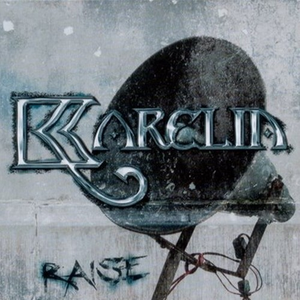
Raise
There is more than one artist with this name, including: 1) Karelia was a 1970s Finnish psych-folk group. 2) Karelia is a French dark symphonic power metal band created in 2000. Note: for the 90s Scottish rock band, see The Karelia. 1) Karelia was a 1970s Finnish psych-folk group headed by Paroni Paakkunainen and jazz guru Edward Vesala with Esa Kotilainen and Matti Kontio. The band released two albums, Suomi Pop and Suomi Pop 2 , as well as singles With the Lord on the Field / Taitaja from Karelia and Tiski-Jukka (Vyborg's Vihtor's Son) / Old Gold (the singles were released under the name Iivana Nyhtänköljä and Karelia) Paakkunainen re-established Karelia at the turn of the 1980s. In addition to Paakkunainen, Esa Kotilainen (keyboards), Eerik Siikasaari (double bass, electric bass) and Matti Kontio (guitar, kantele, strings) and, since 1982, Judo Wasama (drums, percussion) have played in this completely renewed line-up . The band's last album, recorded in 1992 and released in 2005, also features Mongo Aaltonen (percussion). 2) Karelia is a French dark symphonic power metal band from Alsace created in 2000 by Lionel Vest (sound mastering) and Matthieu Kleiber (singer). They've released several albums including Usual Tragedy (2003), Raise (2005), and Restless (2008). Karelia's music is generally referred to as symphonic metal. Next to driving drum parts, progressive rhythms and hard-as-nails guitar riffs, there are anthemic choir parts, hovering string arrangements and numerous cross references to the time of the great classical composers. The compositions are multi-layered, multi-dimensional, away from clichés or genre-typical settings, yet accessible and catchy at the same time. Early 2004 saw the arrival of their debut, Usual Tragedy. Raise, the second album by the quintet, demonstrated how melodies, sounds and lyrical standards can be brought into line. Compared to our first album, we've changed some minor stylistic aspects, says Matthieu Kleiber, vocalist, founder and main composer. The vocals in particular are more unambiguous and easier to pin down this time around. We've concentrated more on mid-tempo numbers, consciously making the album less monotonous by including only a few fast double bass numbers. Karelia have proved themselves as intelligent and sensitive contemporary musicians with their lyrics. Their talent for observation is sharp and critical, their historic understanding pronounced. The title track is an intense exploration of the turmoil of World War II. That war still is inexplicable to me, says Kleiber. We live only a few kilometres away from the German border. Germany and France are good friends. It's impossible to imagine that only sixty years ago there was a bloody war raging between these two countries. A cold shiver runs down the listener's spine when excerpts from a Hitler speech reverberate on 'Raise'. Karelia have turned music into a breathtaking excursion into the past. Karelia also focus on the madness of countries involved in wars – 'Cross & Crescent' doesn't kick off with oriental sounds for no reason, it's a symbol for the culture clash the way it presents itself in the Middle East at the moment. Kleiber: The worst thing for me is the uncertainty which information to trust. Isn't everything we get to hear in Europe propaganda? 'High Hopes', the Pink Floyd classic off the The Division Bell album comes along in a tougher, more metallic outfit, courtesy of Karelia, while it continues to spread a similar intensity as the original. For Matthieu Kleiber, it's a question of honour to interpret the original, but not to disfigure it. We're all big Pink Floyd fans, he confesses. That's what we would like to document with 'High Hopes'. Of course, it could have been any other song. 'Comfortably Numb' was also on my wish list. Karelia was founded by Matthieu Kleiber and keyboarder Lionel Vest, who has gone on to concentrate on other classical projects but is always delighted to help out with orchestral arrangements at the studio. Following the release of their self-produced demo and shows with acts like Kamelot, At Vance, Vanden Plas and Dyslesia, Karelia signed with Drakkar and released their debut, Usual Tragedy, in spring 2004. Next to Kleiber, the current line-up consists of Bertrand Maillot (keyboards), Erwan Morice (guitar), Loïc Jenn (drums) and Gilles Thiebaut (bass). Read more on Last.fm. User-contributed text is available under the Creative Commons By-SA License; additional terms may apply.
There is more than one artist with this name, including: 1) Karelia was a 1970s Finnish psych-folk group. 2) Karelia is a French dark symphonic power metal band created in 2000. Note: for the 90s Scottish rock band, see The Karelia. 1) Karelia was a 1970s Finnish psych-folk group headed by Paroni Paakkunainen and jazz guru Edward Vesala with Esa Kotilainen and Matti Kontio. The band released two albums, Suomi Pop and Suomi Pop 2 , as well as singles With the Lord on the Field / Taitaja from Karelia and Tiski-Jukka (Vyborg's Vihtor's Son) / Old Gold (the singles were released under the name Iivana Nyhtänköljä and Karelia) Paakkunainen re-established Karelia at the turn of the 1980s. In addition to Paakkunainen, Esa Kotilainen (keyboards), Eerik Siikasaari (double bass, electric bass) and Matti Kontio (guitar, kantele, strings) and, since 1982, Judo Wasama (drums, percussion) have played in this completely renewed line-up . The band's last album, recorded in 1992 and released in 2005, also features Mongo Aaltonen (percussion). 2) Karelia is a French dark symphonic power metal band from Alsace created in 2000 by Lionel Vest (sound mastering) and Matthieu Kleiber (singer). They've released several albums including Usual Tragedy (2003), Raise (2005), and Restless (2008). Karelia's music is generally referred to as symphonic metal. Next to driving drum parts, progressive rhythms and hard-as-nails guitar riffs, there are anthemic choir parts, hovering string arrangements and numerous cross references to the time of the great classical composers. The compositions are multi-layered, multi-dimensional, away from clichés or genre-typical settings, yet accessible and catchy at the same time. Early 2004 saw the arrival of their debut, Usual Tragedy. Raise, the second album by the quintet, demonstrated how melodies, sounds and lyrical standards can be brought into line. Compared to our first album, we've changed some minor stylistic aspects, says Matthieu Kleiber, vocalist, founder and main composer. The vocals in particular are more unambiguous and easier to pin down this time around. We've concentrated more on mid-tempo numbers, consciously making the album less monotonous by including only a few fast double bass numbers. Karelia have proved themselves as intelligent and sensitive contemporary musicians with their lyrics. Their talent for observation is sharp and critical, their historic understanding pronounced. The title track is an intense exploration of the turmoil of World War II. That war still is inexplicable to me, says Kleiber. We live only a few kilometres away from the German border. Germany and France are good friends. It's impossible to imagine that only sixty years ago there was a bloody war raging between these two countries. A cold shiver runs down the listener's spine when excerpts from a Hitler speech reverberate on 'Raise'. Karelia have turned music into a breathtaking excursion into the past. Karelia also focus on the madness of countries involved in wars – 'Cross & Crescent' doesn't kick off with oriental sounds for no reason, it's a symbol for the culture clash the way it presents itself in the Middle East at the moment. Kleiber: The worst thing for me is the uncertainty which information to trust. Isn't everything we get to hear in Europe propaganda? 'High Hopes', the Pink Floyd classic off the The Division Bell album comes along in a tougher, more metallic outfit, courtesy of Karelia, while it continues to spread a similar intensity as the original. For Matthieu Kleiber, it's a question of honour to interpret the original, but not to disfigure it. We're all big Pink Floyd fans, he confesses. That's what we would like to document with 'High Hopes'. Of course, it could have been any other song. 'Comfortably Numb' was also on my wish list. Karelia was founded by Matthieu Kleiber and keyboarder Lionel Vest, who has gone on to concentrate on other classical projects but is always delighted to help out with orchestral arrangements at the studio. Following the release of their self-produced demo and shows with acts like Kamelot, At Vance, Vanden Plas and Dyslesia, Karelia signed with Drakkar and released their debut, Usual Tragedy, in spring 2004. Next to Kleiber, the current line-up consists of Bertrand Maillot (keyboards), Erwan Morice (guitar), Loïc Jenn (drums) and Gilles Thiebaut (bass). Read more on Last.fm. User-contributed text is available under the Creative Commons By-SA License; additional terms may apply.
Adventus
Agonizer
Aldaria
Losing My Religion
Restless
Lift Me Up
High Hopes
Called Up
Child Has Gone
Trial
Letter for an Angel
Raise
Torn Dress
Intro
Blind
Crash
Usual Tragedy
The Hermit
Please Come On in
Breakdown
Give It Away
Lovin' Wife
Slave of Time
Unbreakable Cordon
Tearful Clown
From My Window
Coming Turn
My Guilty Absence
Daddy's Grave
Mirror mirror
Disharmonic Dogmas
Please Please Please (Smiths cover)
Cross & Crescent
Deserter
The Deserter
Cross And Crescent
Disharmonic Dogma
Kahella Sarvella
Joulupuu on rakennettu
Mirror, Mirror
peltoniemen hintriikan surumarssi
Divorce At High Noon
To His Coy Dietress
Say Try
Love's A Cliche
hauranmaan polska
The Devil Rides Hyndland
The Infinite Duration
Remorse At High Noon
Dancing Along To Nekrotaphion
Life In A Barrat Garret
Kerimäki Beat
Nostalgia